
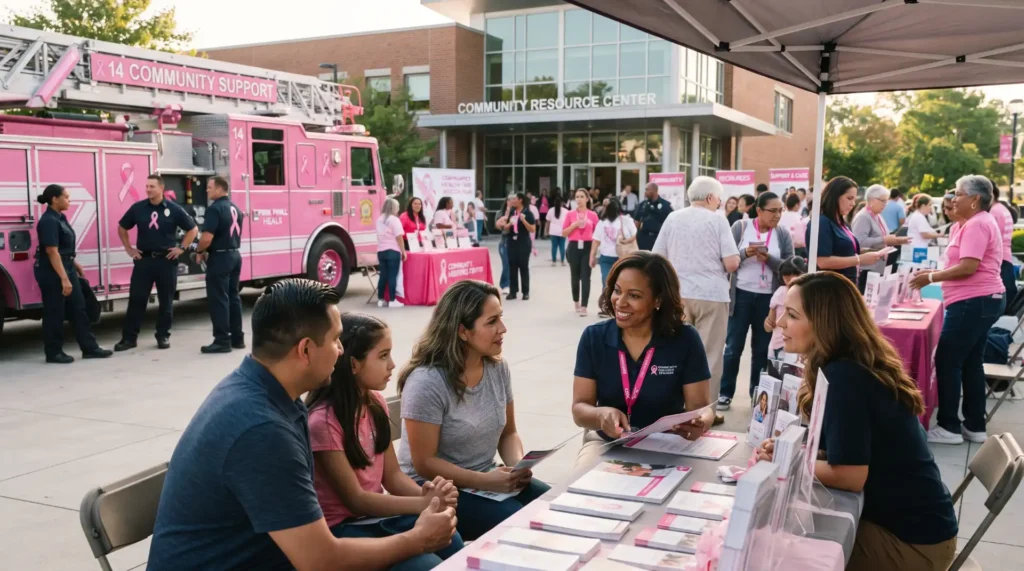
A breast cancer diagnosis can change a person’s life in an instant. Beyond the medical questions that follow, patients and their families may suddenly need to understand appointments, diagnostic tests, treatment options, insurance requirements, transportation, medication costs, work responsibilities, childcare, emotional support, and countless other practical concerns. Even people who are comfortable managing everyday responsibilities can feel overwhelmed when they have to coordinate a complex healthcare journey.
This is where breast cancer patient navigation can make an important difference.
Patient navigation is designed to help people overcome barriers that can make it difficult to obtain appropriate cancer screening, diagnosis, treatment, and follow-up care. According to the Centers for Disease Control and Prevention, patient navigators can work with patients, families, and caregivers to address barriers such as transportation, caregiving responsibilities, language differences, fear, and difficulty understanding the healthcare system. The Community Preventive Services Task Force updated its evidence review on cancer-screening patient navigation in July 2026.
For communities, supporting navigation does not necessarily mean providing medical treatment. Instead, it can mean helping people discover the organizations, professionals, programs, and practical resources that already exist.
A community organization, volunteer group, health center, firefighter organization, or awareness campaign can help make those resources more visible and easier to reach. This is especially relevant to the mission represented by the Pink Fire Truck, which has focused on connecting awareness with community support.
Learn more about the Pink Fire Truck’s community mission
What Is Breast Cancer Patient Navigation?
Breast cancer patient navigation is a support process that helps people move through the healthcare system and connect with resources appropriate to their individual circumstances.
A navigator does not replace a physician, oncologist, nurse, social worker, or other healthcare professional. Instead, navigation can complement medical care by helping patients address practical and informational barriers.
The American Cancer Society explains that cancer navigators may help patients understand information, locate community resources, coordinate appointments, communicate with healthcare teams, and address practical concerns such as transportation, insurance, medications, food, housing, childcare, and work responsibilities.
The role can look different depending on the organization. A navigator may be a nurse, social worker, community health worker, trained volunteer, or another qualified professional. Some navigators work inside hospitals and cancer centers, while others operate through community organizations or nonprofit programs.
The common goal is to make the cancer-care journey easier to understand and more manageable.
For someone newly diagnosed with breast cancer, that assistance can be particularly valuable because the patient may be trying to process emotionally difficult information while also making appointments and completing paperwork.
Navigation can provide a consistent point of contact when the healthcare system feels complicated or fragmented.
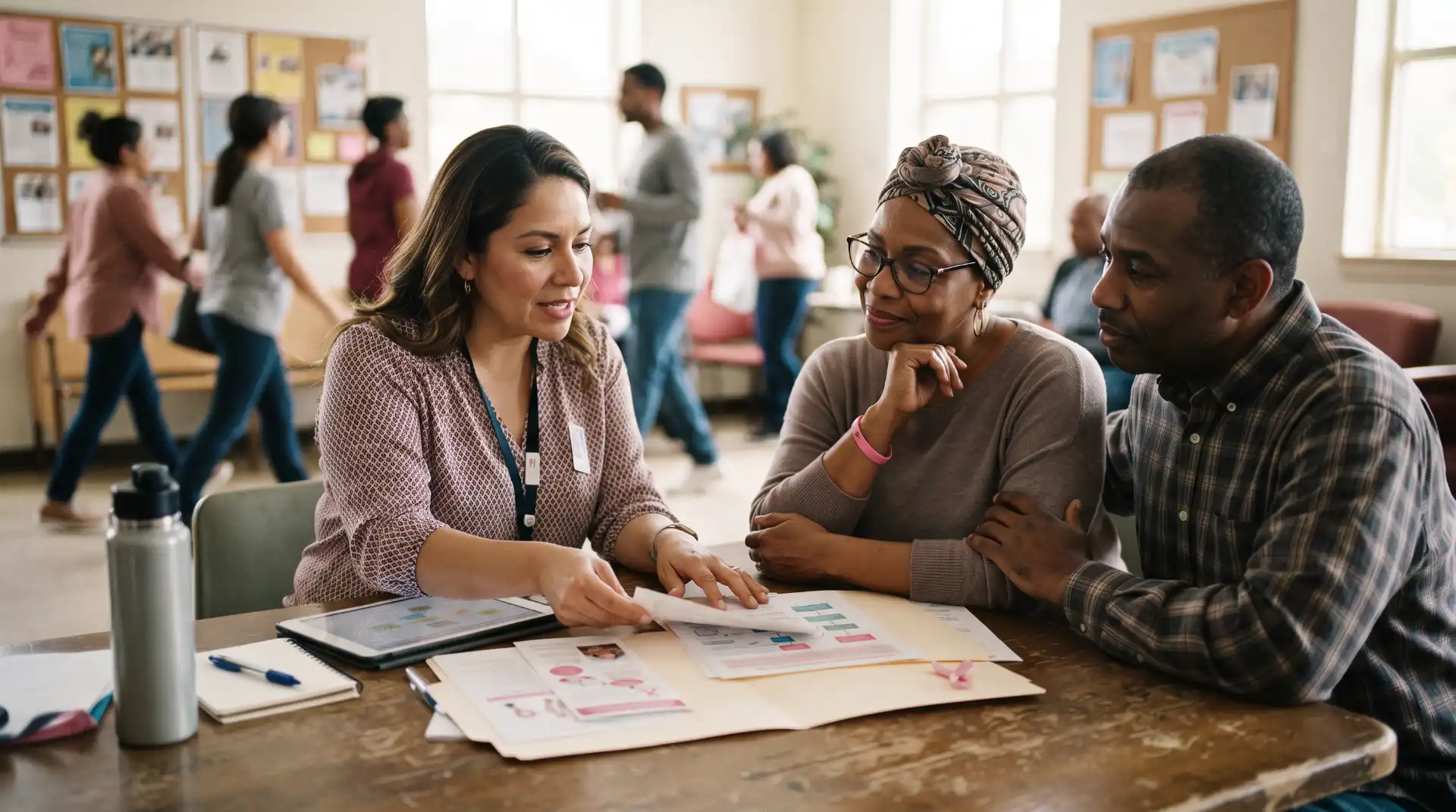
Why Navigation Matters After a Breast Cancer Diagnosis
Knowing that breast cancer screening and treatment are important does not automatically mean that everyone can access them easily.
A person may understand the importance of follow-up care but lack transportation to an appointment. Another patient may have difficulty understanding insurance requirements. Someone living in a rural community may need to travel a significant distance to reach a specialized cancer center.
Other patients may be balancing treatment with employment, parenting, caregiving for an older relative, or other responsibilities.
These challenges can exist independently or occur simultaneously.
For example, imagine a patient who receives an abnormal screening result. She may need additional imaging and follow-up appointments. She may work hourly shifts and worry about missing work. She may not have a reliable vehicle. She may also be responsible for caring for young children.
The medical recommendation may be straightforward, but following through can be difficult.
Patient navigation is intended to help address those practical obstacles.
The CDC identifies transportation, childcare or eldercare, language barriers, mistrust of the healthcare system, and fear of screening or diagnosis among potential barriers that patient navigation can help address.
This makes navigation more than a convenience. It can be an important connection between awareness and access.
Communities Can Help Make Resources Easier to Find
One of the most useful things a community can do is make reliable information easier to discover.
People facing breast cancer may not know which organizations offer transportation assistance, where to find support groups, how to locate screening programs, or which questions to ask a healthcare provider.
Community organizations can help by creating resource directories, hosting educational events, sharing information from established cancer organizations, and connecting residents with qualified healthcare and social-service professionals.
The goal should not be to overwhelm people with hundreds of links and brochures. Instead, communities can organize information into clear categories that reflect common needs.
A simple community resource program might help people locate information about screening, diagnostic follow-up, treatment centers, transportation, financial assistance, emotional support, caregiver services, nutrition, housing, and survivorship.
The information should come from reputable organizations and should be reviewed regularly because programs, eligibility requirements, phone numbers, and services can change.
Patient Navigation Can Begin Before a Diagnosis
Although patient navigation is often associated with cancer treatment, navigation can also play a role in screening and follow-up after an abnormal result.
A person may delay screening because of cost concerns, transportation problems, fear, scheduling difficulties, or uncertainty about where to go.
Community-based navigation can help people understand where to seek appropriate information and how to contact healthcare providers.
The CDC’s National Breast and Cervical Cancer Early Detection Program, for example, provides screening, diagnostic, and treatment services for eligible women with low incomes who do not have adequate insurance. The program also incorporates patient navigation to help eligible women access care.
This illustrates an important point: navigation is not necessarily something that begins after cancer treatment starts.
It can help people move through multiple stages of the healthcare process.
Helping People Understand the Healthcare System
The American healthcare system can be difficult to navigate even when someone is healthy.
When cancer enters the picture, the number of appointments, providers, tests, referrals, insurance questions, and treatment decisions can increase significantly.
A patient navigator can help explain the practical steps involved without making medical decisions for the patient.
For example, a navigator might help a patient understand which appointment needs to happen first, what paperwork needs to be completed, which organization may provide transportation, or where to find a support group.
Navigators can also help patients prepare questions for their healthcare team.
This distinction is important. A navigator can help someone prepare for a conversation with a medical professional, but the navigator should not substitute personal medical advice for professional medical care.
Good navigation keeps the patient connected to qualified healthcare providers while reducing unnecessary confusion around the process.
Transportation Is an Important Community Need
Transportation can be one of the most significant practical challenges for people receiving cancer care.
Treatment may require repeated visits rather than a single appointment. Patients may need to travel for imaging, consultations, procedures, chemotherapy, radiation therapy, surgery, rehabilitation, or follow-up care.
Not everyone has access to a personal vehicle, and public transportation may not be convenient or available in every community.
Transportation challenges can become particularly difficult for people living in rural areas.
Communities can help by identifying existing transportation programs and making those resources easier to find.
Local nonprofits, healthcare systems, community organizations, transportation agencies, and cancer-support organizations may offer different forms of assistance.
A patient navigator can help determine which programs may be appropriate and what eligibility requirements apply.
The important role for community organizations is often connection rather than direct transportation management.
Financial Concerns Can Affect Access to Care
Cancer treatment can create financial pressure for patients and families.
Medical bills are only part of the issue. A patient may also face transportation costs, reduced work hours, childcare expenses, prescription costs, lodging expenses, or other everyday costs associated with treatment.
A person who is worried about finances may not know where to begin looking for assistance.
Patient navigation can help identify available resources and direct patients toward appropriate organizations.
The American Cancer Society notes that cancer navigators may help patients find resources for financial concerns, insurance issues, medications, food, lodging, childcare, eldercare, and work-related challenges.
Community groups can support this process by maintaining updated resource information and avoiding promises about eligibility or financial assistance.
Instead of telling someone that a particular program will definitely cover an expense, a responsible community resource should explain where the person can contact the program and verify eligibility.
That distinction protects patients from receiving inaccurate information at a stressful time.
Language and Cultural Barriers Should Not Be Ignored
Effective patient navigation also means recognizing that communities are diverse.
A patient may speak a language other than English, have limited health literacy, or come from a cultural background with different expectations about healthcare.
Language barriers can make complicated medical information even more difficult to understand.
The CDC identifies language differences as one of the barriers patient navigation can help address.
Community organizations can help by identifying multilingual resources and directing patients toward qualified interpreters and appropriate healthcare services.
Information should be presented clearly and respectfully.
It is also important to avoid assuming that every member of a particular cultural group has the same beliefs, experiences, or healthcare needs.
Good navigation begins with listening to the individual.
The Role of Family Caregivers
Breast cancer affects more than the person receiving treatment.
Family members, spouses, partners, friends, and other caregivers may suddenly become responsible for transportation, household tasks, meals, childcare, appointment scheduling, medication reminders, or emotional support.
These responsibilities can become overwhelming.
Patient navigation can include caregivers in resource conversations when the patient wants that support.
The American Cancer Society notes that cancer navigators can help identify support for caregivers and families as well as resources addressing practical needs.
Community programs can also create spaces where caregivers can find information and connect with appropriate support organizations.
Helping caregivers is not separate from supporting patients. When caregivers have better access to information and practical resources, they may be better positioned to support their loved ones.
How Firefighters and Community Organizations Can Help
The Pink Fire Truck provides an interesting example of how a recognizable community symbol can help start conversations around breast cancer awareness.
Firefighters have traditionally been associated with emergency response and public service. Community-based awareness initiatives can use that existing connection to encourage residents to learn more about available resources.
The Pink Fire Truck site describes its mission as supporting survivors, raising awareness, and connecting communities.
That mission can naturally complement patient navigation when awareness activities include reliable resource information.
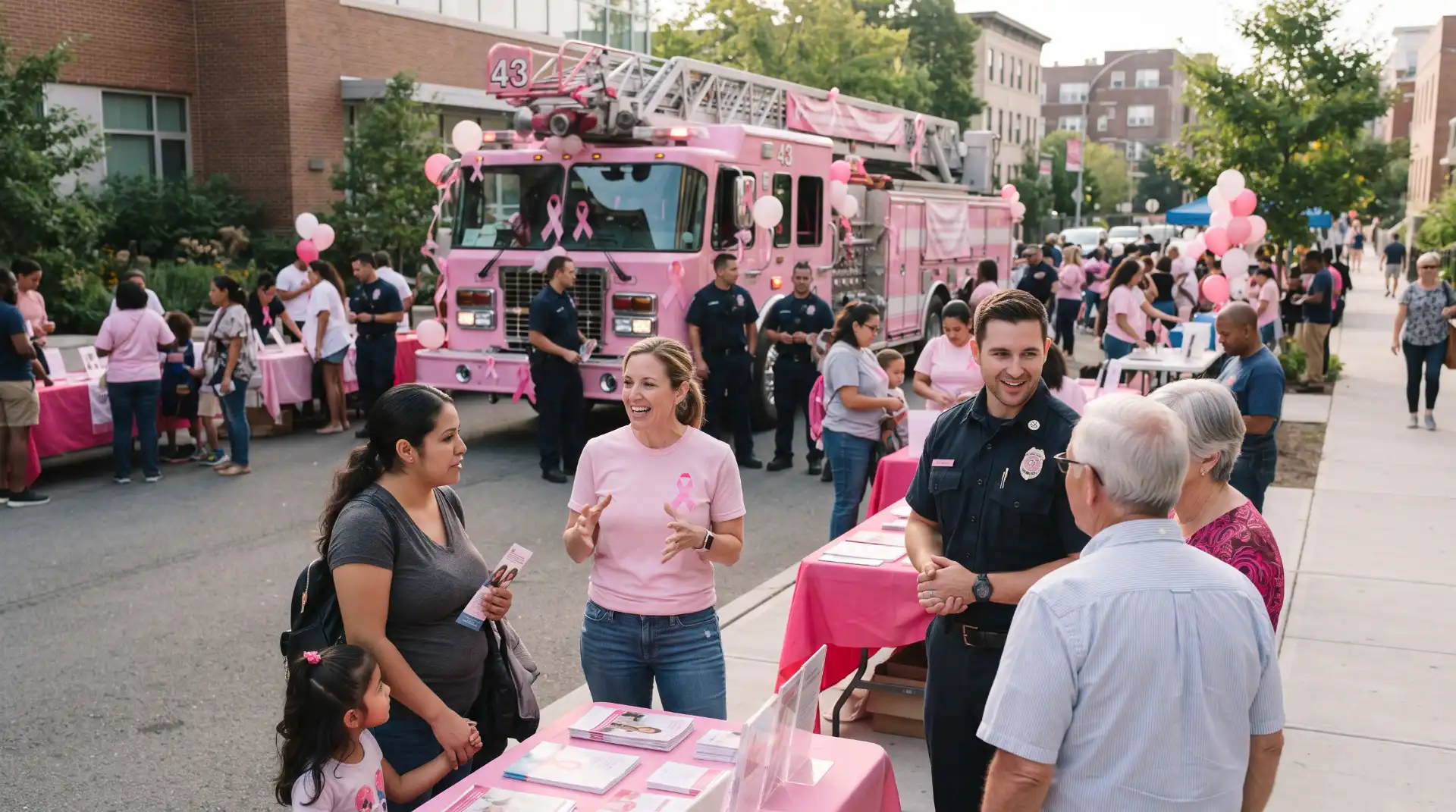
For example, a community event featuring a pink fire truck could include information about local cancer centers, screening resources, transportation assistance, caregiver support, survivor programs, and national cancer organizations.
The objective should not be to turn a community event into a medical clinic.
Instead, it can create an approachable environment where people discover where to go for additional help.
This is particularly valuable for people who may not know that navigation services exist.
The Pink Fire Truck has also previously explored the connection between first responders and breast cancer awareness, making community-resource navigation a natural extension of that conversation.
Read more about Pink Fire Truck, breast cancer, and first responders
Community Events Can Become Resource Gateways
Breast cancer awareness events are often associated with walks, fundraisers, educational programs, survivor celebrations, and public gatherings.
These events can provide more than visibility.
They can also serve as gateways to reliable information.
A community event could include a resource table with information from established healthcare and cancer organizations. Volunteers could help attendees identify appropriate services without attempting to provide medical diagnoses or treatment recommendations.
The event could also offer information about transportation, support groups, caregiver resources, financial assistance programs, and screening services.
The key is organization.
Too much information can be as frustrating as too little.
Resource materials should be divided into understandable categories and written in accessible language.
People should also be encouraged to verify medical information with qualified healthcare professionals.
Mobile Screening and Patient Navigation Can Work Together
Community screening programs can help bring services closer to people who might otherwise face access barriers.
Pink Fire Truck has already published content about mobile mammography and community screening, making patient navigation a useful complementary topic rather than a repetition of that article.
Read the Pink Fire Truck article about mobile mammography and community screening
Screening itself is only one part of the process.
A person may attend a screening event and receive a result requiring additional follow-up. The next question becomes: Where does that person go?
Navigation can help connect screening with the next appropriate step.
That connection is especially important because awareness without follow-through may leave people uncertain about what to do next.
The Community Preventive Services Task Force’s 2026 update recognizes patient navigation as an evidence-based intervention for increasing breast, cervical, and colorectal cancer screening and advancing health equity.
This makes navigation a natural part of a broader community strategy.
Creating a Community Breast Cancer Resource Network
Communities do not have to build a completely new healthcare system to improve navigation.
In many cases, the resources already exist but are disconnected.
A community resource network can bring together hospitals, cancer centers, nonprofits, transportation organizations, social-service agencies, survivor groups, community health workers, and local organizations.
The first step is identifying what already exists.
Organizations can then determine which gaps remain.
For example, a community might have several cancer treatment facilities but limited transportation assistance. Another area might have screening programs but limited information about financial support.
Navigation becomes stronger when organizations understand how their services connect.
Partnerships can also reduce duplication.
Instead of several organizations creating separate and outdated directories, a community may benefit from maintaining a smaller number of reliable resource pathways.
Training Volunteers to Provide Better Resource Information
Volunteers can be valuable participants in community awareness programs, but training matters.
Someone who wants to help should understand the difference between providing general information and giving medical advice.
Volunteers should know where to direct questions they cannot answer.
They should also understand privacy and respect boundaries.
For example, a volunteer at a public event should not ask someone to disclose detailed medical information in front of strangers.
A better approach is to provide a private area where attendees can speak with a qualified navigator or appropriate professional.
Volunteers can also help distribute verified resource information and explain where people can find additional assistance.
The goal is to make the first connection easier.
Digital Navigation Is Becoming More Important
Technology can also support patient navigation.
People increasingly use websites, mobile applications, online appointment systems, video consultations, digital support communities, and electronic resource directories to locate information.
Digital tools can make resources available outside normal business hours.
However, technology does not eliminate the need for human support.
A person facing a cancer diagnosis may still need someone to explain where to begin or help identify which resource is relevant.
Digital information should therefore complement—not replace—human navigation.
Organizations should also consider people who have limited internet access, limited digital literacy, or difficulty using online healthcare systems.
A strong community navigation strategy should offer more than one way to access information.
Reliable Information Matters More Than Ever
Breast cancer information is widely available online, but not every website provides accurate or appropriate medical information.
Patients can encounter outdated recommendations, misleading claims, commercial promotions, personal anecdotes presented as medical facts, and information that does not apply to their individual circumstances.
Community organizations should prioritize established medical and public-health sources.
The CDC provides a collection of breast cancer educational resources covering topics such as signs and symptoms, family history, BRCA-related information, and awareness materials.
For broader cancer navigation and support information, the American Cancer Society also provides patient-navigation resources.
American Cancer Society: Patient Navigation in Cancer Care
Using authoritative sources helps community organizations avoid accidentally spreading inaccurate health information.
Navigation Should Be Patient-Centered
No two breast cancer experiences are exactly alike.
A person’s age, location, insurance situation, employment, family responsibilities, transportation options, language needs, support network, and treatment plan can all influence what resources are useful.
Patient navigation should therefore begin with questions rather than assumptions.
What does the person need?
What barrier is making care difficult?
What resources are already available?
What information is missing?
Who needs to be involved?
These questions help create a more personalized pathway.
A patient may need transportation rather than financial assistance. Another may need childcare. Someone else may primarily need help understanding how to schedule follow-up appointments.
Effective navigation responds to the actual barrier.
Supporting Survivors Beyond Active Treatment
Navigation does not necessarily end when active treatment ends.
Survivors may have ongoing follow-up appointments, emotional concerns, financial challenges, workplace issues, family concerns, or questions about adjusting to life after treatment.
Community programs can help survivors discover appropriate survivorship resources and support networks.
The transition away from active treatment can sometimes feel like another major change.
Someone who has spent months or years surrounded by healthcare professionals may suddenly have fewer appointments and less structured support.
Community connections can provide an additional layer of support.
This does not mean every survivor needs the same type of program. Instead, communities should make a range of resources visible so people can choose what fits their circumstances.
How Local Organizations Can Improve Navigation
A local organization interested in supporting breast cancer patient navigation can start small.
It might begin by identifying the major cancer-care organizations serving the surrounding area and documenting their public resource information.
The organization can then identify transportation programs, financial-assistance resources, caregiver support, survivor groups, screening programs, and other services.
Once those resources are identified, the next step is making them easy to find.
A website page, printed guide, community event, or resource table can help.
Information should include the organization name, general purpose, contact method, geographic coverage, and any publicly available eligibility information.
Because community resources change, the information should be reviewed periodically.
A resource directory that is several years old may contain disconnected phone numbers or programs that no longer exist.
Measuring Whether a Navigation Program Helps
Community organizations should also think about how they will evaluate their efforts.
Success is not simply the number of brochures distributed.
Organizations may want to track whether people successfully connected with screening services, received assistance with transportation, located support programs, or obtained information about available resources.
The CDC recommends developing processes for monitoring navigation systems and tracking relevant outcomes.
Evaluation can help organizations understand what is working and where additional partnerships are needed.
For example, if many residents request transportation assistance but few transportation programs are available, that information can help community leaders identify a specific local gap.
Data can therefore guide future outreach without turning patients into statistics.
Building Trust Through Consistent Community Presence
Trust is an important part of health outreach.
People may be more willing to ask questions when information is presented in familiar community settings by organizations they recognize.
A pink fire truck at a local event can attract attention, but the long-term value comes from what happens after someone notices it.
If the event connects people with accurate information, respectful volunteers, qualified navigators, and established organizations, awareness can become a meaningful pathway toward assistance.
Consistency matters as well.
Communities benefit when breast cancer resources are available throughout the year rather than only during Breast Cancer Awareness Month.
Awareness campaigns can be especially powerful when they encourage practical action while remaining respectful of survivors and patients.
Turning Awareness Into Practical Support
Breast cancer awareness has traditionally relied on symbols, campaigns, educational messages, fundraising, and public events.
Those activities remain important, but awareness can go one step further.
It can help people identify where to find assistance.
A person who sees a pink fire truck at a community event might become curious about breast cancer awareness. That moment can become an opportunity to provide information about screening, navigation, support services, and reputable health organizations.
This is where the concept of patient navigation fits naturally into community outreach.
The message becomes more than simply “be aware.”
It becomes “if you need help, here are reliable places to start.”
Why Patient Navigation Is a Community Issue
Breast cancer care takes place within healthcare systems, but access to that care is influenced by the communities surrounding patients.
Transportation systems, workplaces, family networks, social-service organizations, community centers, nonprofit groups, and local health programs can all affect whether a person can successfully obtain care.
That means patient navigation is not solely a hospital issue.
It can also be a community issue.
The CDC’s current patient-navigation guidance specifically emphasizes partnerships between healthcare organizations and community-based organizations.
This partnership model can be particularly useful in communities where healthcare resources exist but are difficult for some residents to reach.
The Pink Fire Truck and the Next Stage of Community Awareness
The Pink Fire Truck represents a highly visible connection between first responders, public service, breast cancer awareness, survivors, and community engagement.
Its existing content emphasizes the truck’s role as a symbol of hope and community connection.
Patient navigation adds another dimension to that conversation.
Instead of awareness stopping at recognition, communities can focus on connection.
A community member who needs help should be able to move from awareness to reliable information, from information to an appropriate resource, and from that resource toward the professional care or support they need.
That process does not require a pink fire truck to solve a person’s healthcare challenges.
It requires partnerships, accurate information, trained people, and a willingness to help residents find the right starting point.
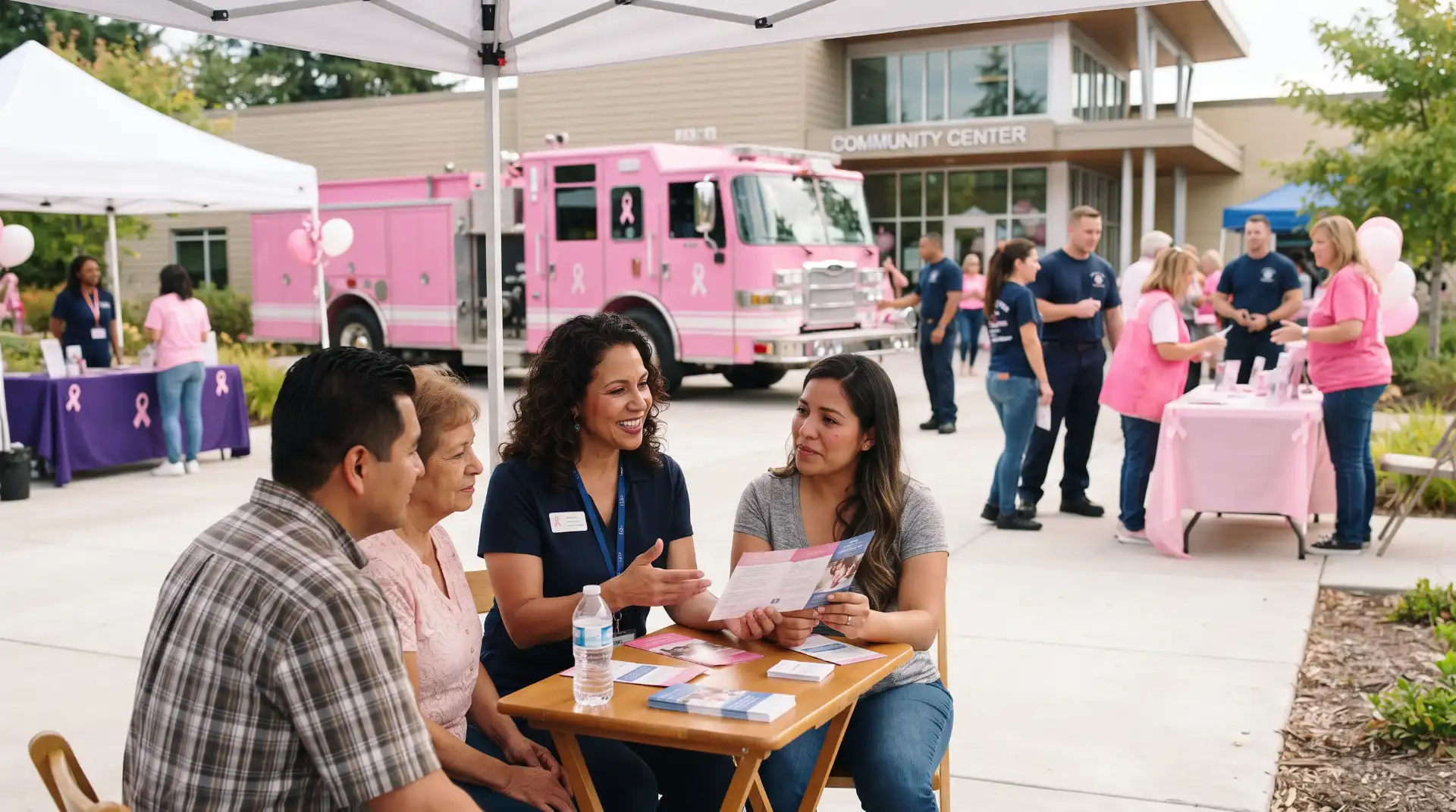
How Individuals Can Help Someone Navigate Breast Cancer Resources
Family members, friends, coworkers, neighbors, and community volunteers can also support navigation.
One of the most useful forms of assistance may simply be listening.
A newly diagnosed person may not know what questions to ask or where to begin. A supportive person can help organize information, write down questions for healthcare appointments, locate reputable resources, or help identify transportation and practical support.
People should also respect the patient’s choices and privacy.
Support should not become pressure.
A helpful friend can offer to research transportation options, for example, while allowing the patient to decide whether they want that assistance.
The same principle applies to community organizations.
Navigation should empower people rather than make decisions for them.
Looking Ahead: A More Connected Approach to Breast Cancer Support
The future of breast cancer awareness will likely involve more than traditional awareness campaigns.
Communities can increasingly focus on connecting people with services, improving access to reliable information, strengthening partnerships, and reducing practical barriers.
Patient navigation fits into that broader approach because it recognizes an important reality: knowing what healthcare people need is not always enough to help them obtain it.
People may need someone to explain the next step.
They may need transportation.
They may need help understanding insurance.
They may need childcare while attending an appointment.
They may need information in another language.
They may need to find a support group or financial resource.
They may simply need a trusted person to help them understand where to begin.
Those needs are different, but they share one common requirement: connection.
Conclusion: Helping People Find the Right Path
Breast cancer patient navigation is ultimately about making complicated systems easier to approach.
For patients and families, the healthcare journey can involve numerous decisions and practical challenges. For communities, the opportunity is to make reliable resources more visible and easier to access.
The CDC’s current guidance recognizes patient navigation as an evidence-based strategy for addressing barriers to cancer screening and care, while organizations such as the American Cancer Society provide navigation resources addressing practical, informational, and support needs.
Community organizations do not need to provide medical treatment to make a difference.
They can create connections.
They can help residents discover trustworthy resources, support transportation and outreach partnerships, provide accurate educational materials, involve caregivers, and encourage people to speak with qualified healthcare professionals when medical questions arise.
For a mission centered on hope, awareness, survivors, and community, this is an important next step.
The Pink Fire Truck can be more than a recognizable symbol at an awareness event. The broader lesson is that visible awareness becomes more meaningful when it helps people find practical support.
When communities work together to connect patients with the right resources, awareness can become action—and action can help people feel less alone as they navigate the challenges of breast cancer.